Restoration
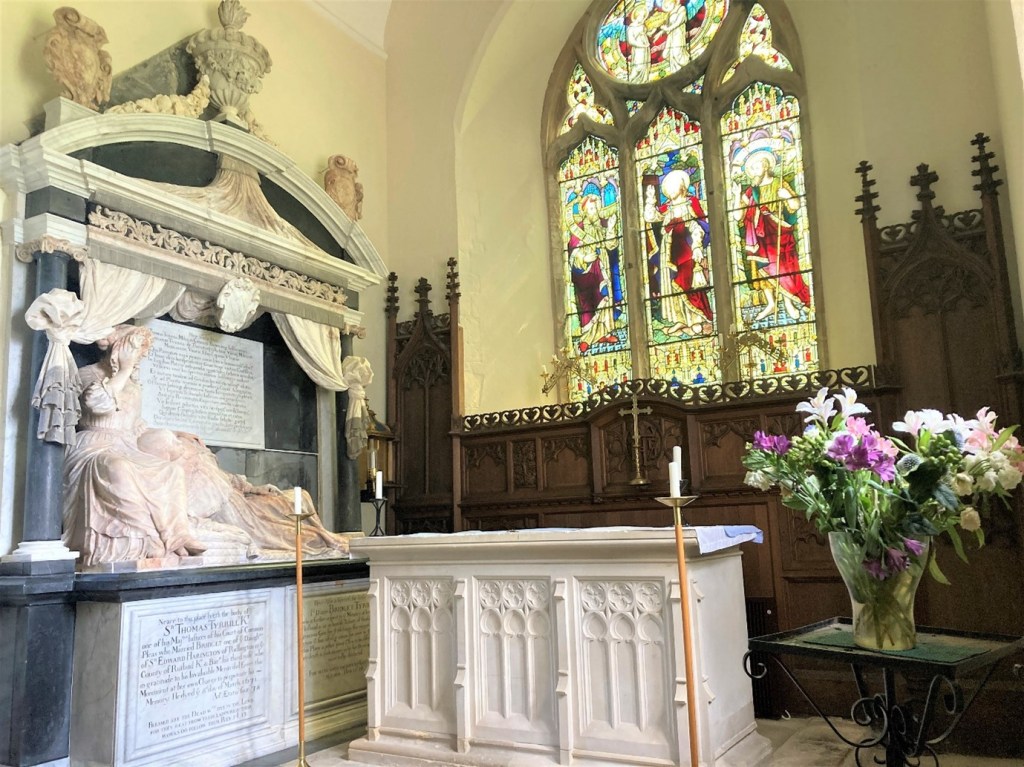
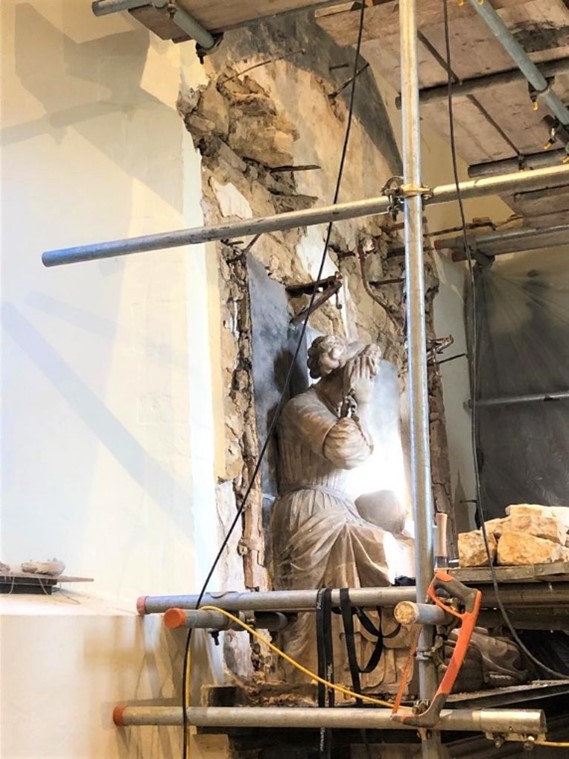
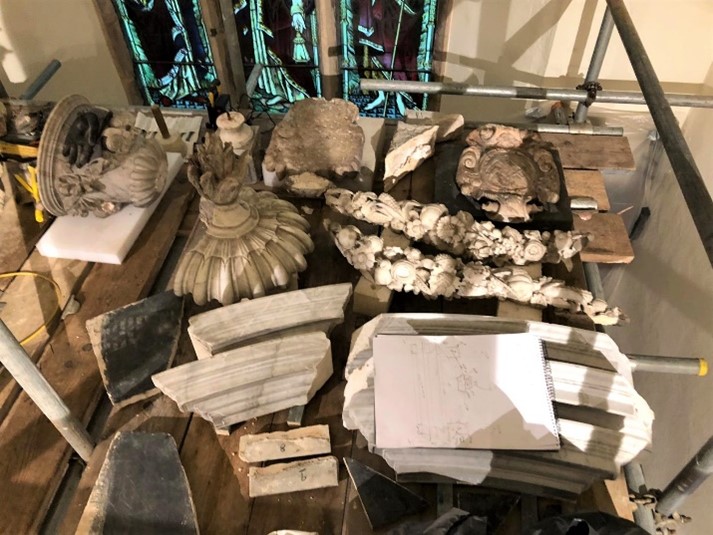
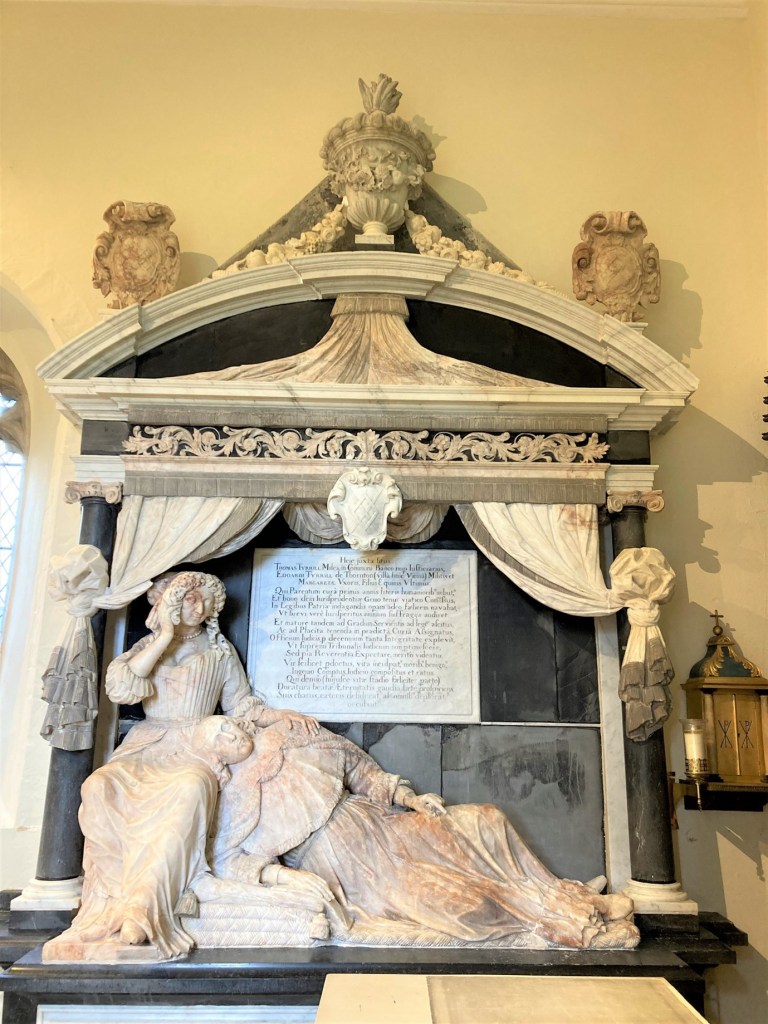
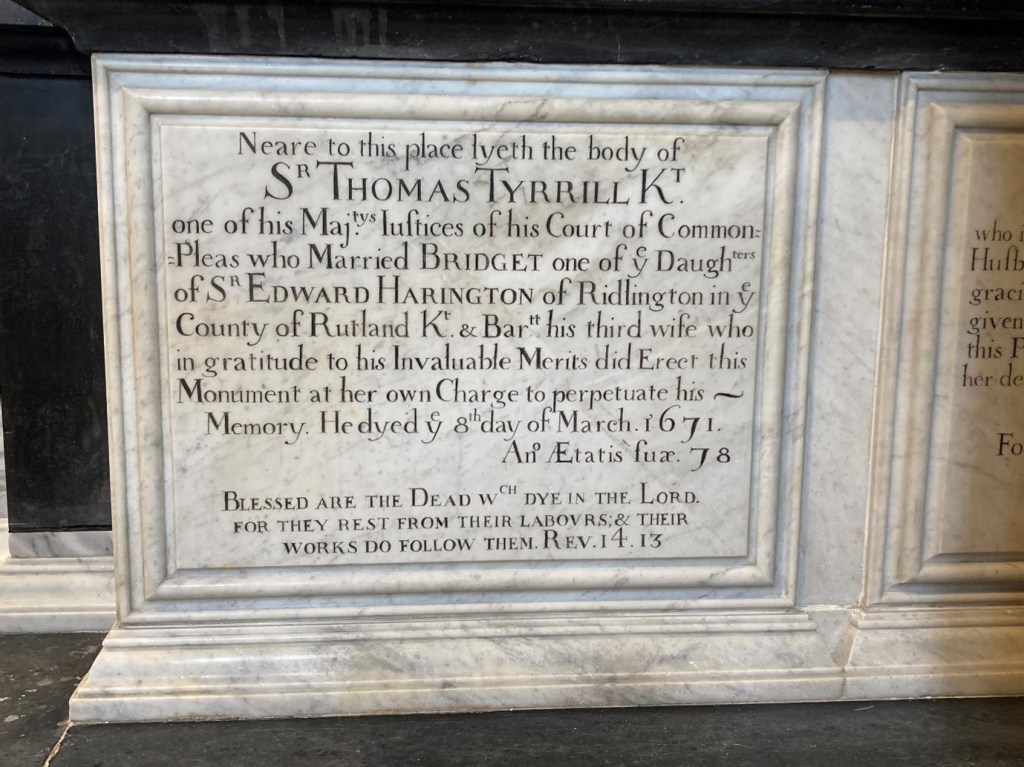
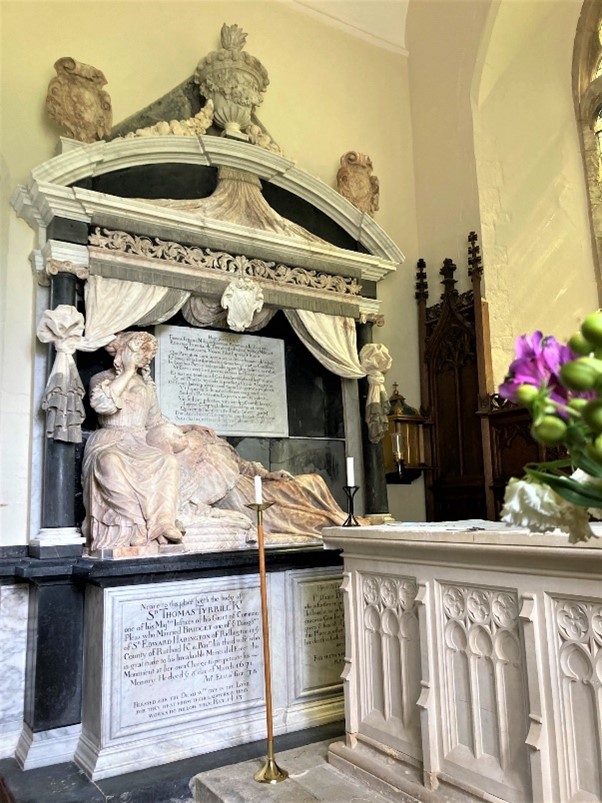
Skillingtons have recently completed an extensive restoration of our 350 year old monument commemorating Sir Thomas Tyrrill. Over a period of three months, a professional team dismantled, catalogued, removed, restored and re-erected the monument for future generations to enjoy. All their work was done on site.
Is the monument important?
Yes! Nikolaus Pevsner, the established art and architectural historian, suggested that the sculptor was Jaspar Latham, who worked closely with Sir Christopher Wren after the Great Fire of London. It has also been argued that it could be the work of William Stanton, based on the similarities with other contemporary monuments in Buckinghamshire. If the attribution can be proven to either of these masons, the Tyrrill monument would be of national significance.
He also notes it’s one of only 11 in Buckinghamshire dated between 1660-80 ; the only one on this scale (it is 4.45m tall, 2.82m wide and projects 7.5cm from the wall) and the only one with an effigy.
Who was Sir Thomas Tyrrill?
Born 23rd June 1594, he was Lord of the Manor in Castlethorpe and fought for the Parliamentarians during the English Civil War at the Battle of Lostwithiel. He was also MP for Aylesbury, and one of the judges appointed to resolve property disputes arising from the rebuilding of London after the Great Fire in 1666.
He was thus a person of modest national significance during a period of great turmoil in British history.
What does the monument depict?
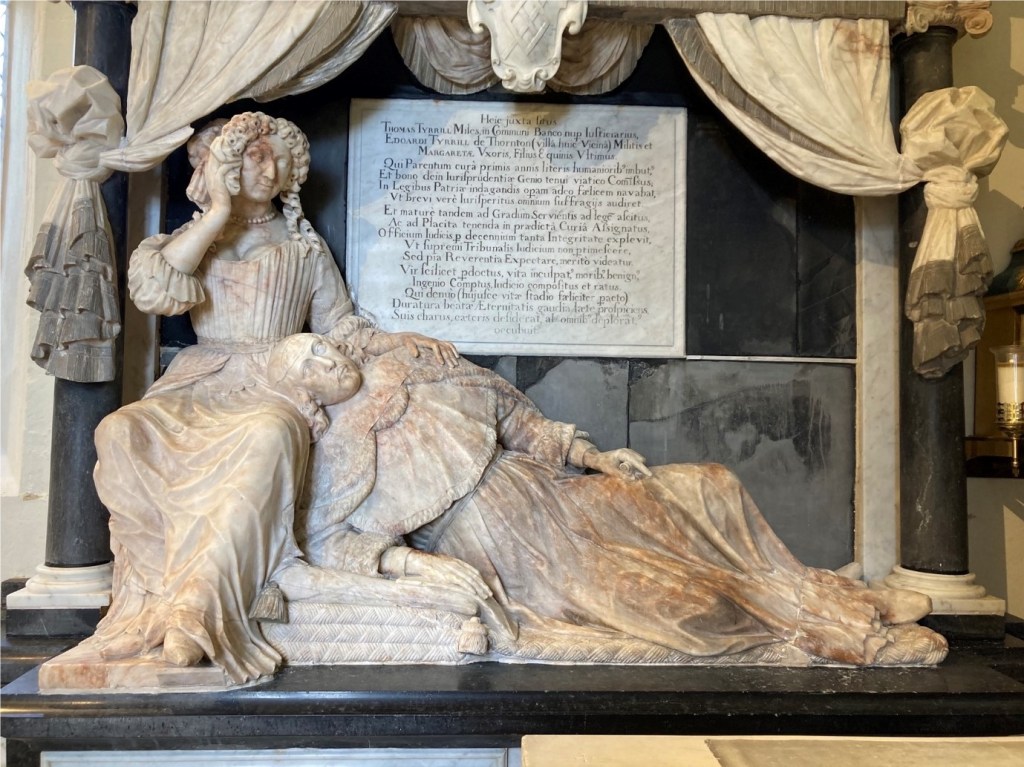
This impressive monument next to the altar was erected by Dame Bridget Tyrrill, Sir Thomas’ third wife, after his death in 1671. It’s said to depict how Sir Thomas died, sitting with his wife in the window seat of their home, slumping gentle sideways on cushions.
Why the monument needed restoring
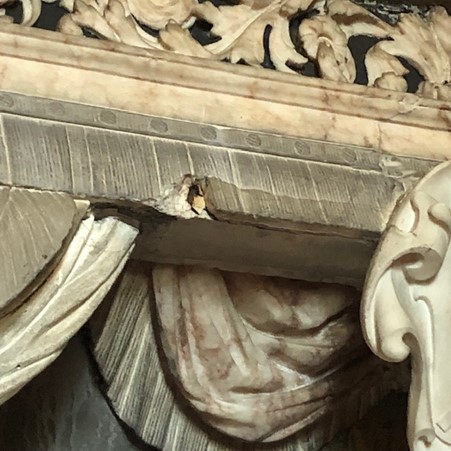
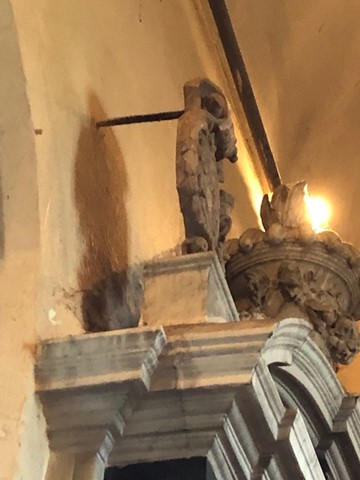
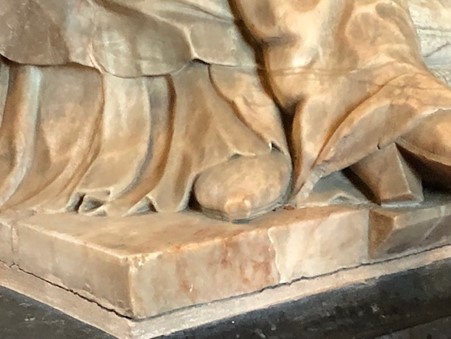
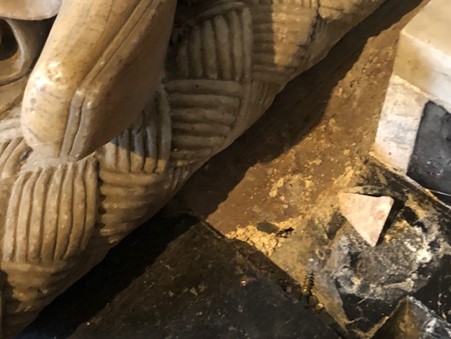
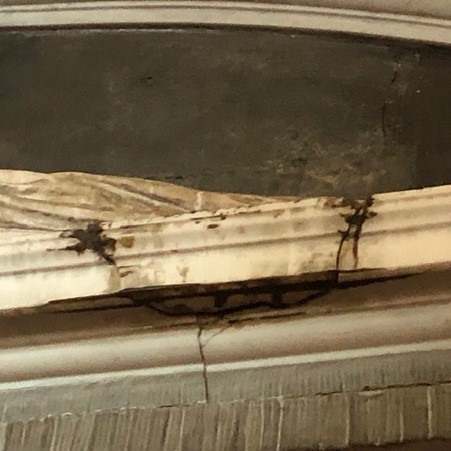
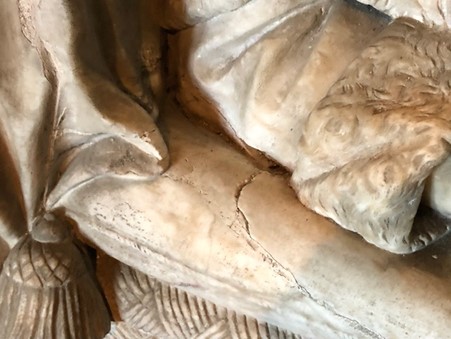
Despite being inside, the Tyrrill monument had corroding iron fixings which had caused extensive disruption to the structure and its decorative features. We were advised this damage would only worsen over the coming years.
These photos show some of the stains, fallen decorative features and numerous open joints. This work was the first since the monument was erected in the 1670s, apart from minor plaster fill and (sometimes crude) repairs.




After the restoration
We invite you to come and see the following changes for yourself.

We are very grateful to the following organisations, whose grants made this restoration possible:
ChurchCare with financial support from the Pilgrim Trust and the Radcliffe Trust £9,000
Francis Coales Charitable Foundation £6,000
The Leche Trust £4,000
St Andrews Conservation Trust £2,000
William & Jane Morris Bequest, a member of the Society of Antiquaries £1,000

 Ss Simon & Jude, Castlethorpe